

Should I Be Concerned 3 Year Old Isn't Drawing Stick Figures
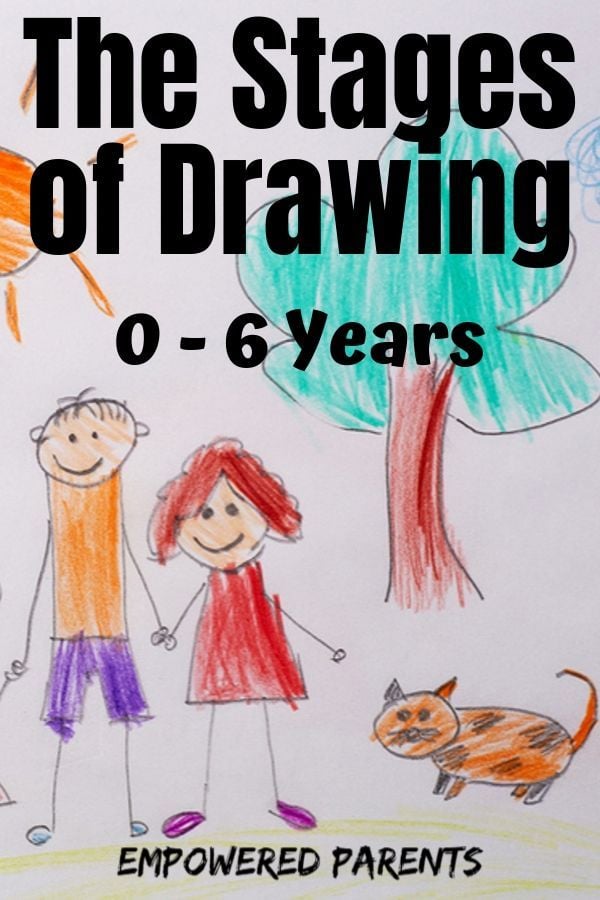
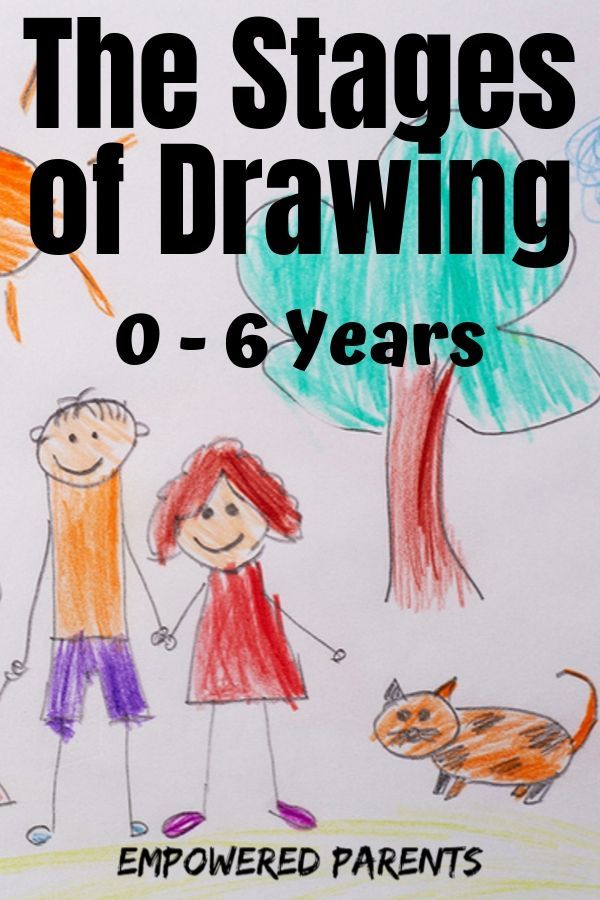
Here is a cursory overview of the fascinating stages of drawing in kid evolution and why it'due south important to encourage immature children to draw.
Cartoon is a natural process for all children. From infancy, children begin by experimenting with drawing tools and making marks on newspaper, and as they grow, these marks start taking on significant.
Drawing ultimately becomes a child'southward fashion of expressing their understanding of the world and all the things that are important to them.
Find out how children learn to draw and why it's a crucial activity. There is also a breakup of the stages of drawing development at various ages.
How to Teach a Child to Draw
During the early years, It's important to focus on the process of artistic cartoon, and not on the product.
There is no demand to formally teach children to draw. The best way to teach them is to give them exposure to materials and drawing tools and permit them express themselves freely.
As they grow and mature, their drawings will become more detailed and reflect the globe around them.
Avoid the temptation to provide models for children to copy and limit their exposure to colouring books . These only serve to take away natural creativity.
Why Cartoon is Of import
There are many benefits of drawing during the toddler and preschool years. It:
- builds a kid's fine motor skills
- develops hand-eye coordination
- develops creative expression through free drawing
- is the foundation of pre-writing skills
- builds a child's attention span
- develops cognitive understanding of concepts
Tracing pictures or "educational activity" a child to describe by post-obit models are not natural, age-advisable ways to develop inventiveness.
The Stages of Cartoon
Hither are the characteristics of the various developmental stages of children's drawings. These are not gear up in stone equally children develop at their own unique rates.
They will reach the milestones at their ain footstep, however, they all progress through the same stages, which are based on their level of understanding.
The characteristics are listed by age.
Watch the video below for a summary of each phase, or read on for a breakup of the diverse ages.
12 Months: Random Marks and Scribbles
The first stage of drawing is about exploring and developing motor coordination.
At effectually 15 to xviii months babies begin to develop uncontrolled scribbles that don't stand for annihilation.
Shapes
Babies begin by making random marks and soon begin to form:
- scribbles
- vertical and horizontal lines
- multiple line drawings
Agreement
For babies, drawing is really about learning crusade and effect and their ability to make things happen.
It has little to exercise with creating and representing their world, and more to exercise with enjoying their movements and the effects of them.
Their scribbles enable them to larn about the properties of objects, materials and tools such equally pencils, pens, paint, crayons and paper.
Grip
From around 15 months of age, toddlers are usually able to grasp crayons with their whole mitt (called a palmar grasp).
ii Years: Controlled Scribbles
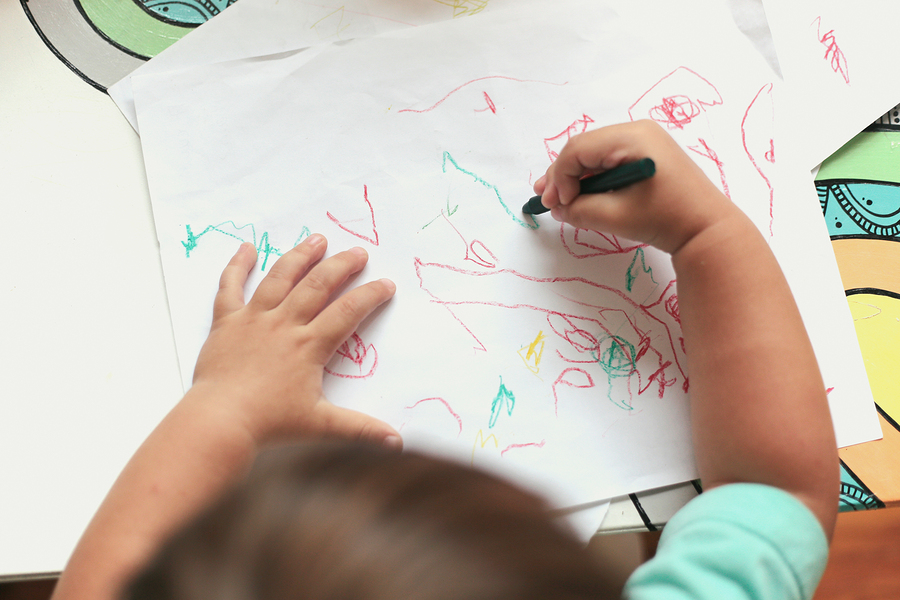
This stage is known as controlled scribbling .
It is characterized by spontaneous circular or to-and-fro scribbles and dots.
Similar scribbles can be found in all children's drawings at this age and the shapes in them are necessary for developing drawing and writing skills afterward on.
Shapes
Toddlers begin to make drawings that include:
- horizontal and vertical lines
- multiple loops and spirals
- roughly drawn circles
- shapes that resemble letters T and V
Grip
Ii-year-olds acquire to hold a pencil well downwardly the shaft towards the betoken, using their thumb and first 2 fingers (called a tripod grasp).
They will commonly employ their preferred hand.
Understanding
At this age, toddlers begin to observe the connection between the movements they make and the marks that grade on the paper. They volition begin to repeat movements on purpose.
By the terminate of this year, these drawings evolve into uncomplicated diagrams .
3 Years: Bones Shapes
During this stage, children begin to use bones shapes in their drawings equally their fine motor command and hand-eye coordination improve.
Shapes
Drawings at this age include the following shapes, combined in unlike means:
- circles and squares
- crosses
- dots
- shapes that resemble messages T, Five and H
Drawing of a person
The first cartoon of a person normally emerges around 3 or 4 years of age.
These 'tadpole' people are drawn with just a head and unremarkably legs directly fastened to the head.
Grip
A 3-yr-erstwhile holds a pencil well-nigh the tip, between the start 2 fingers and the thumb.
They utilize the preferred mitt and hold the pencil with good command.
At this age, you can help your child develop a good tripod grasp past using triangular crayons.
Understanding
At this age, children are able to tell you what their scribbles correspond, although you may not exist able to see what they have described.

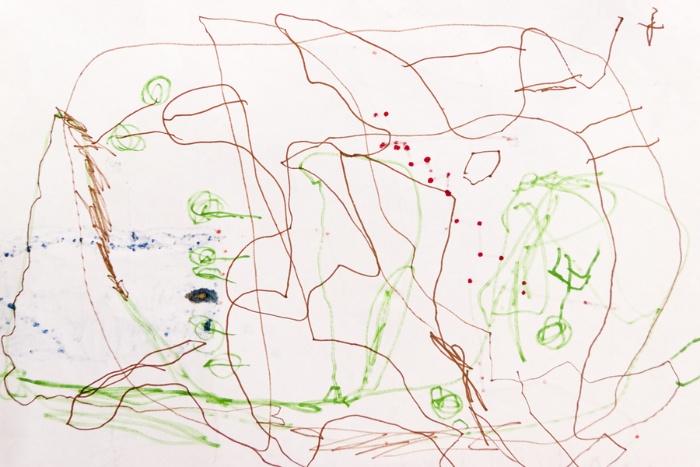
They usually name their film while drawing it or subsequently it is complete, but they practise non starting time a drawing with a clear program for what they will depict.
The use of colour at this stage is unrealistic and they often prefer to use merely one colour.
4 Years: Patterns and 'Tadpole' People
By 4 years of age, patterns showtime emerging in children's drawings. A child will make a pattern and interpret it as a representation of something, giving it a label.
Shapes
Their drawings include:
- Squares, circles and rectangles
- Attempts at triangles and diamonds, although she may not exist able to form them withal
- Crosses
- Letters (pretend writing)
Cartoon of a person
A iv-year-old'southward drawing of a person volition progress from a head with legs to include details such as eyes – since eye contact is important to them.
They draw non what they see, just what they know, and will add details as they become of import to them.
Details such as arms, fingers and a trunk emerge.
Drawing other images
By 4-and-a-half they brainstorm to combine ii or more shapes or forms together to form bones images, such as a rectangle and a circle to class a lid. They often learn this from adults.
The first shapes children make consistently volition normally form people, but subsequently includes basic images such as a business firm or sun.
Grip
At this stage, they hold a pencil with good control, in an adult way.
Agreement
Drawing takes on more meaning and intention. Children usually decide what they are going to draw before they begin.
They deliberately try to combine shapes and lines together and their pictures start to look like the images they draw.
v Years: Pictures and Portraits
v-year-olds brainstorm to show much creativity in their drawings.
Shapes
Their drawings will include:
- Basic shapes
- Triangles and diamonds
- Spontaneous letters (to imitate writing)
Drawing of a person
A portrait of a person emerges, with many details such equally hair, easily and fingers, anxiety and a body.
Drawing other images
They draw images such as animals, houses, vehicles, trees, plants, flowers and rainbows.
They are able to include details – such as drawing a business firm with a door, windows, roof and chimney.

Grip
Past 5 years of age, children should accept developed good control when holding a pencil, crayon or paintbrush.
Understanding
Children will now draw spontaneously and begin to show their ain background, interests and experiences in their drawings. They describe what they know.
Their representation of people, animals and houses changes constantly.
They will also name their picture show before starting time.
They can colour within the lines but their use of colour may still be unrealistic.
At this indicate, people and objects may still exist floating in the air every bit children are still developing spatial perception.
They usually place themself in the heart of a cartoon due to their egocentric nature (seeing themselves equally the centre of the world).
6 Years: Drawings Represent Interests and Experience
By vi or 7 years, children take their own way of drawing, which can normally be recognized by adults.
Shapes
By the fourth dimension they are 7, they volition be able to class good circles, squares, rectangles, triangles and diamonds in his drawings.
Drawing of a person
A child ordinarily settles on a certain representation of a person at this historic period and tends to draw them all with the same basic shape.
For example, they volition depict the whole family with the same body outline but will brand the members of the family unit different sizes and evidence gender with pilus and apparel.
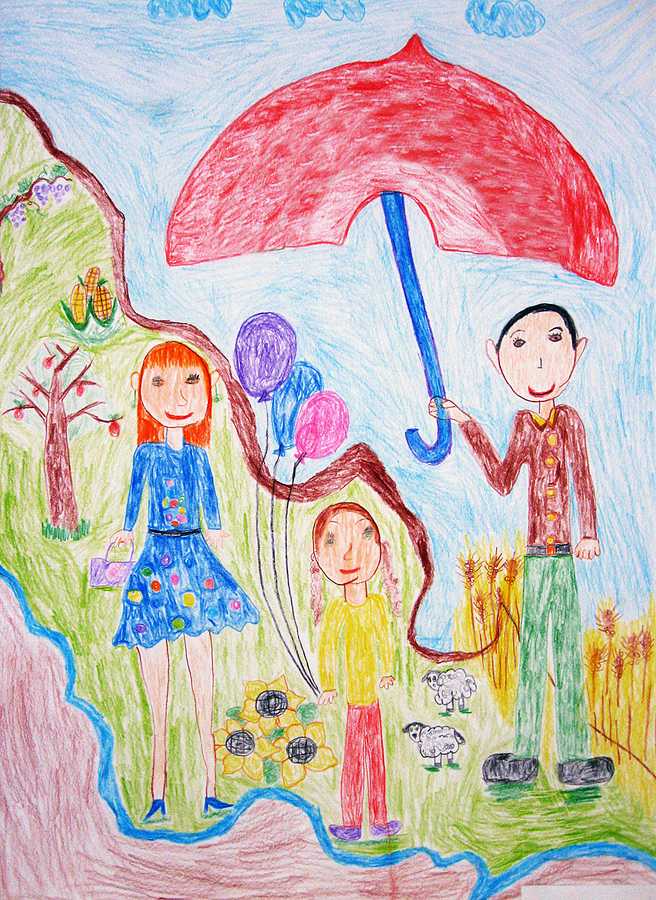
Drawing other images
Drawings represent all kinds of animals and things, usually those that interest them the almost.
They tend to depict animals with human-like faces.
Understanding
At this phase, children show their higher level of knowledge by drawing people, animals and objects on a baseline, such equally on the basis or grass.

They also show perception by cartoon, for example, copse college than the house or flowers that are small.
This cartoon shows a kid's greater agreement of depth and distance.

The manner they run across the world comes through their drawings. They leave out unimportant things and enlarges things that are important to them.
They may draw a small door on a house, only big plenty for themselves, or very loftier windows, since they cannot reach them.
They tin can also show movement in their drawings past portraying objects that are flying or drawing the legs of an animal wider autonomously if running.
Their utilize of colour becomes quite realistic.
I hope you lot've enjoyed reading nigh the stages of cartoon development in immature children and are inspired to encourage your children to do lots of free drawing and creative expression.
Sources:
Hendrick, H . 1990. Total Learning: Developmental Curriculum for the Young Kid . 3rd Edition. Macmillan Publishing Company: New York.
Pieterse, Chiliad. 2007. Language and School Readiness . Metz Printing: Welgemoed.
Natanson, J. 1998. Learning Through Play: A parent'south guide to the first five years. Tafelberg Publishers Limited: Greatcoat Town.
Fisher, B. 1991. Joyful Learning: A Whole Language Kindergarten. Heinemann: New Hampshire.

Source: https://empoweredparents.co/child-development-drawing-stages/
Posted by: hurleyalubly.blogspot.com
0 Response to "Should I Be Concerned 3 Year Old Isn't Drawing Stick Figures"
Post a Comment